

Table of Contents[Hide][Show]
When a flight is delayed or canceled, most people are left guessing. The airline gives vague updates, the gate agent is overwhelmed, and it’s not clear whether you’re entitled to anything beyond a rebooking. Many travelers assume that compensation either doesn’t exist or only applies in rare situations.
That uncertainty is usually what leads people to AirHelp. You may have come across the name while trying to understand your options and wondered whether AirHelp is legitimate, how it actually works, and whether using a service like this makes sense compared to filing a claim on your own.
AirHelp is most commonly used for flights covered by European passenger protection laws, which allow eligible travelers to claim cash compensation (up to $650 per passenger) for long delays and cancellations. If your flight involved Europe, it’s worth understanding the rules outlined in this EU flight delay compensation guide under EC261 and UK261
This AirHelp review breaks it all down in plain English — how AirHelp works, when it can help you recover flight delay compensation, and when you might be better off handling a claim yourself.
What Is AirHelp?
AirHelp is a flight compensation service that helps passengers claim money they are legally owed for flight delays, cancellations, and missed connections, primarily under EU and UK passenger protection laws.
Instead of dealing directly with airlines, AirHelp:
- Reviews your flight for eligibility
- Submits the compensation claim
- Handles follow-ups and legal escalation if needed
AirHelp operates on a no-win, no-fee model, meaning you don’t pay anything upfront.
Is AirHelp Legitimate?
Yes — AirHelp is a legitimate flight delay compensation service that has helped millions of passengers pursue claims under EU261 and UK261 regulations.
That said, legitimacy does not mean AirHelp is always the best option for every traveler. It works best in specific situations, particularly when airlines are slow, unresponsive, or actively denying valid claims.
This review helps you decide whether AirHelp is right for your situation, not just whether it exists.
What Types of Flight Delays Can AirHelp Help With?
AirHelp is most effective for international flights, especially those involving Europe.
Flights That Commonly Qualify
- Flights departing from the EU or UK
- Flights arriving in the EU or UK on EU-based airlines
- Delays of 3 hours or more
- Airline-caused cancellations or missed connections
Flights That Usually Do NOT Qualify
- Most US domestic flight delays
- Delays caused by severe weather or air traffic control
- Short delays under 3 hours
Compensation rules vary significantly depending on where you’re flying and why the delay happened. If you’re still trying to figure out which rules apply to your situation, this global flight delay and cancellation compensation guide provides a helpful overview.
How AirHelp Flight Delay Compensation Works
One reason AirHelp is popular is because the process is simple and mostly hands-off.
- Submit Your Flight Information
You provide your flight number, date, and route. - Eligibility Review
AirHelp checks operational data to determine whether compensation laws apply. - Claim Submission
If eligible, AirHelp files the claim with the airline. - Escalation if Necessary
If the airline refuses to pay, AirHelp may pursue the claim legally. - Payout
If compensation is recovered, AirHelp deducts its fee and sends you the remainder.
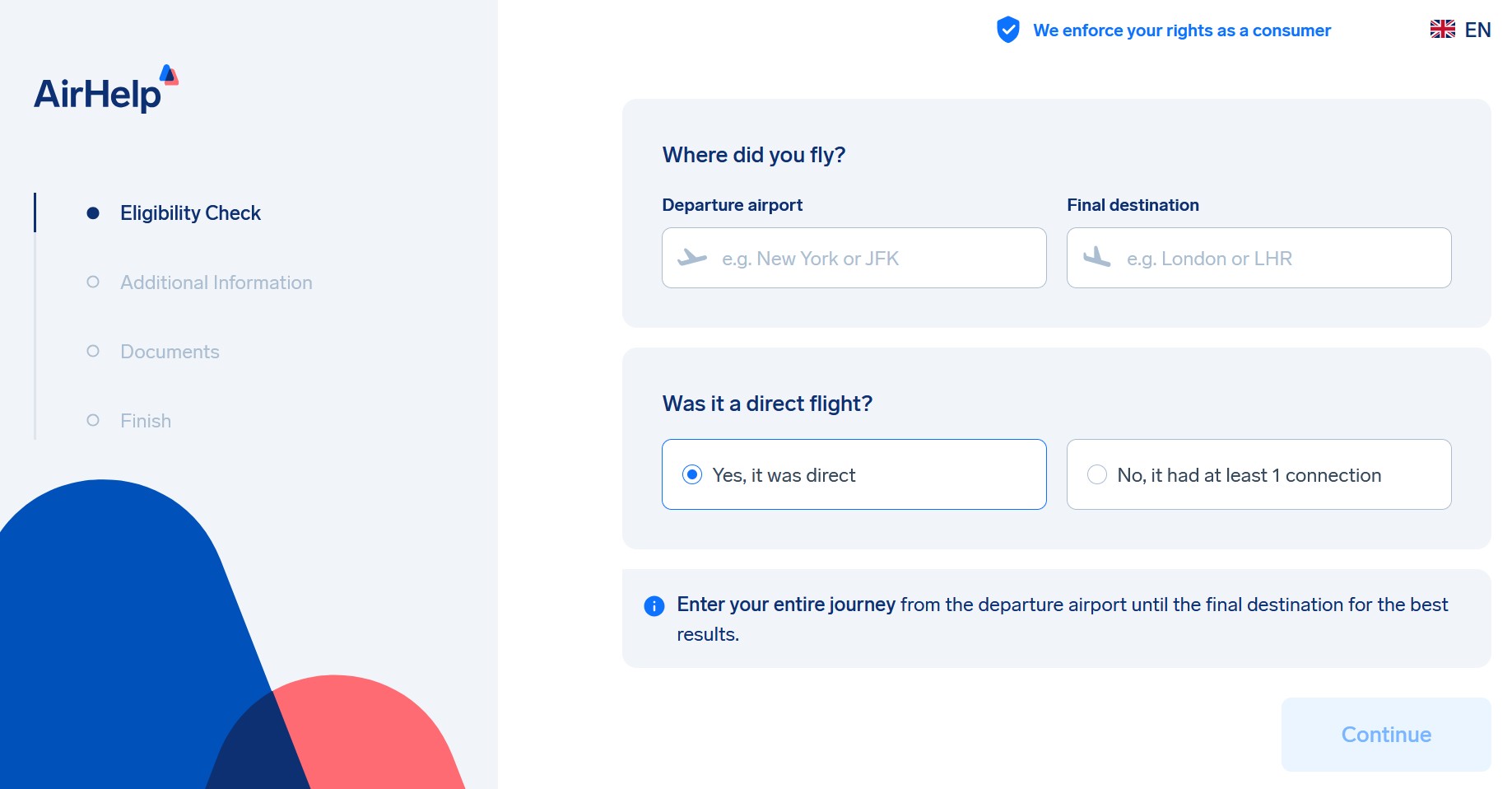
You don’t have to negotiate with the airline or navigate legal rules yourself.
How Much Does AirHelp Charge?
AirHelp does not charge upfront fees. Their fee is taken only if your claim is successful.
The exact percentage varies depending on whether legal action is required, but this structure works well for travelers who:
- Don’t want to risk legal costs
- Have already been denied by the airline
- Are dealing with older or complicated claims
For many passengers, receiving a reduced payout is better than receiving nothing at all.
AirHelp vs Filing a Claim Yourself
You always have the option to file directly with the airline. Whether that’s worth doing depends on your patience and the airline involved.
Filing Directly with the Airline
Pros:
- You keep 100% of the compensation
- No service fees
Cons:
- Airlines frequently reject valid claims
- Long response times
- Legal escalation is difficult
Using AirHelp
Pros:
- No upfront cost
- Legal escalation included
- Minimal time and effort required
Cons:
- A portion of compensation goes to fees
AirHelp is often most useful when airlines delay, deny, or ignore valid claims.
Which Airlines Does AirHelp Work With?
AirHelp can assist with claims involving most major European and international airlines, including, but certainly not limited to:
They can also handle EU-departing flights operated by non-EU airlines.
How Far Back Can AirHelp Claim Compensation?
Many travelers are surprised to learn that older flights may still be eligible for compensation.
Depending on the country where the claim is filed:
- Claims may be valid 2 to 6 years after the flight
- Airlines are still required to pay if eligibility is met
This makes AirHelp especially helpful if:
- You didn’t know compensation was possible
- Your claim was previously denied
- The flight happened several years ago
What Documentation Is Required for Older AirHelp Claims?
One reason many people assume it’s “too late” to file a claim is that they no longer have all the documents from the trip. In reality, AirHelp can often work with surprisingly limited information, even for flights that happened several years ago.
At a minimum, you’ll usually need:
- The airline name
- The flight number
- The approximate travel date
- The departure and arrival airports
If you still have your booking confirmation or e-ticket email, that’s helpful — but it’s not always required. AirHelp can often verify flight details using airline and airport records, especially for EU and UK flights.
For older claims, additional documentation may be requested if available, such as:
- Boarding passes (digital or printed)
- Email notifications about delays or cancellations
- Any correspondence you had with the airline
- Receipts for meals, hotels, or transportation (if reimbursement is part of the claim)
If you no longer have these, it doesn’t automatically disqualify you. Many successful claims rely on operational flight data, not personal records alone.
What matters most is that the flight meets the legal criteria — documentation helps, but eligibility comes first. This is why passengers are often surprised to learn that even flights from several years ago may still qualify for compensation.

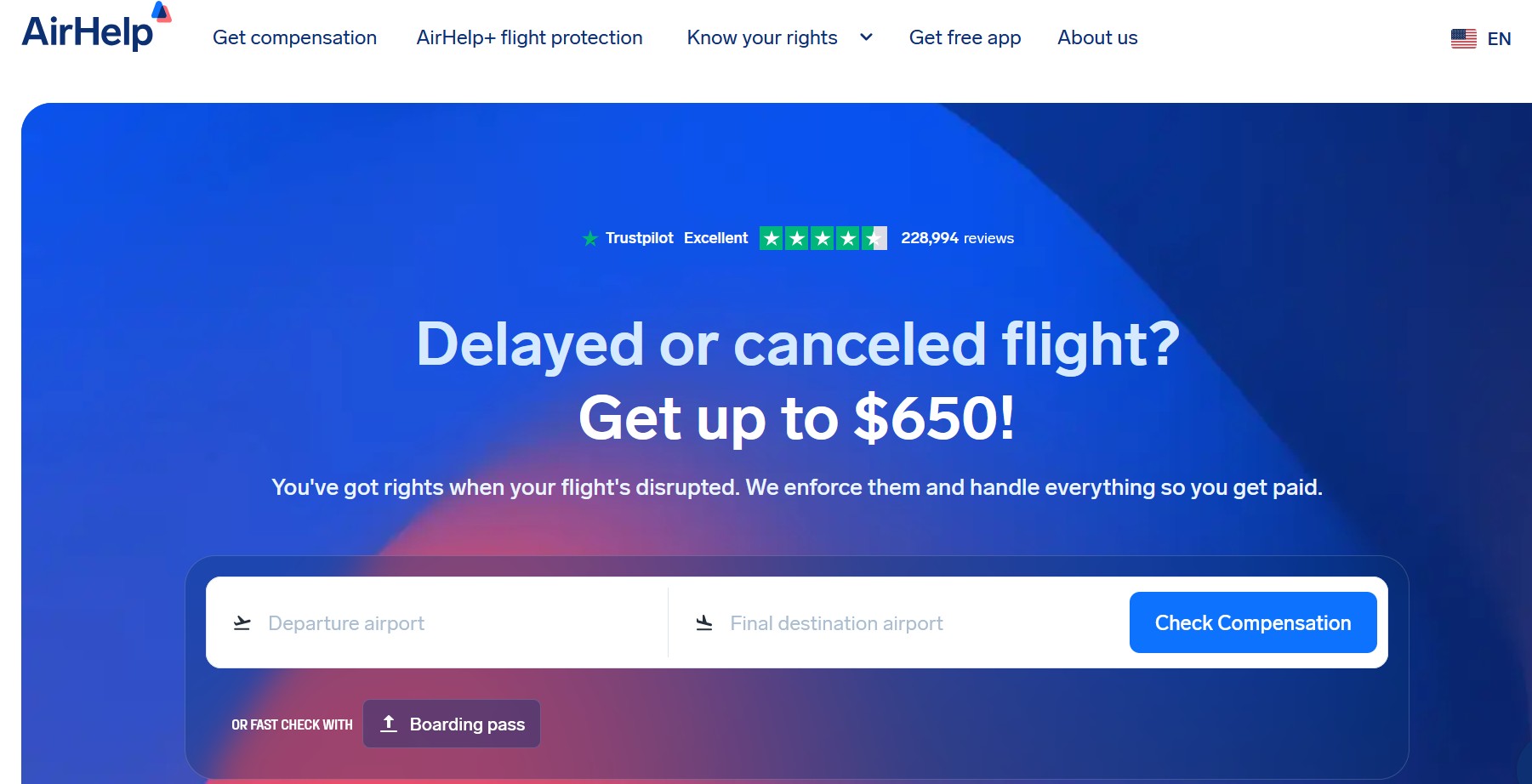
AirHelp can help you get up to $650 in compensation (per passenger) if your flight is canceled or delayed more than 3 hours.
When Does Using AirHelp Make Sense?
AirHelp is usually a good option if:
- The airline is unresponsive or uncooperative
- The delay involves legal gray areas
- You don’t want to manage the process yourself
It is less useful for:
- Short domestic US delays
- Weather-related disruptions
- Situations where compensation is clearly not required
AirHelp Review: Final Thoughts
AirHelp is a legitimate and practical solution for passengers who qualify for flight delay compensation but don’t want to fight airlines on their own. It’s not free — but for many travelers, it removes friction that would otherwise prevent any payout at all.
If you’re unsure whether your flight qualifies, it’s often worth checking, especially for EU and UK flights where compensation rules strongly favor passengers.
Related Guides
You may also find these helpful:
- EU Flight Delay Compensation (EC261 Guide)
- US Flight Delay Rules
- Global Flight Delay Compensation Rules

Tim White is the founder of milepro.com, a luxury travel resource featured in CNBC, Travel & Leisure, and other major media outlets. With over 2 million miles flown and 30+ years of business travel experience, he holds Hyatt Globalist, Marriott Lifetime Titanium, and Hilton Diamond status — and has spent years decoding the world of luxury hotel programs, preferred partner benefits, and miles & points optimization so you don’t have to.
 Hotel Travel Agent Rates Explained: How Advisor Discounts Really Work
Leave a Reply